

Jak Petzold
LSSSE Research Analyst

What do law students give up in order to succeed? The answer is often assumed to be “everything else”—sleep, exercise, social life. Yet the LSSSE 2024–2025 data suggest something more nuanced. Students are not abandoning these activities altogether but are engaging in them in limited, uneven ways, often at levels that may not fully support their well-being or academic performance.
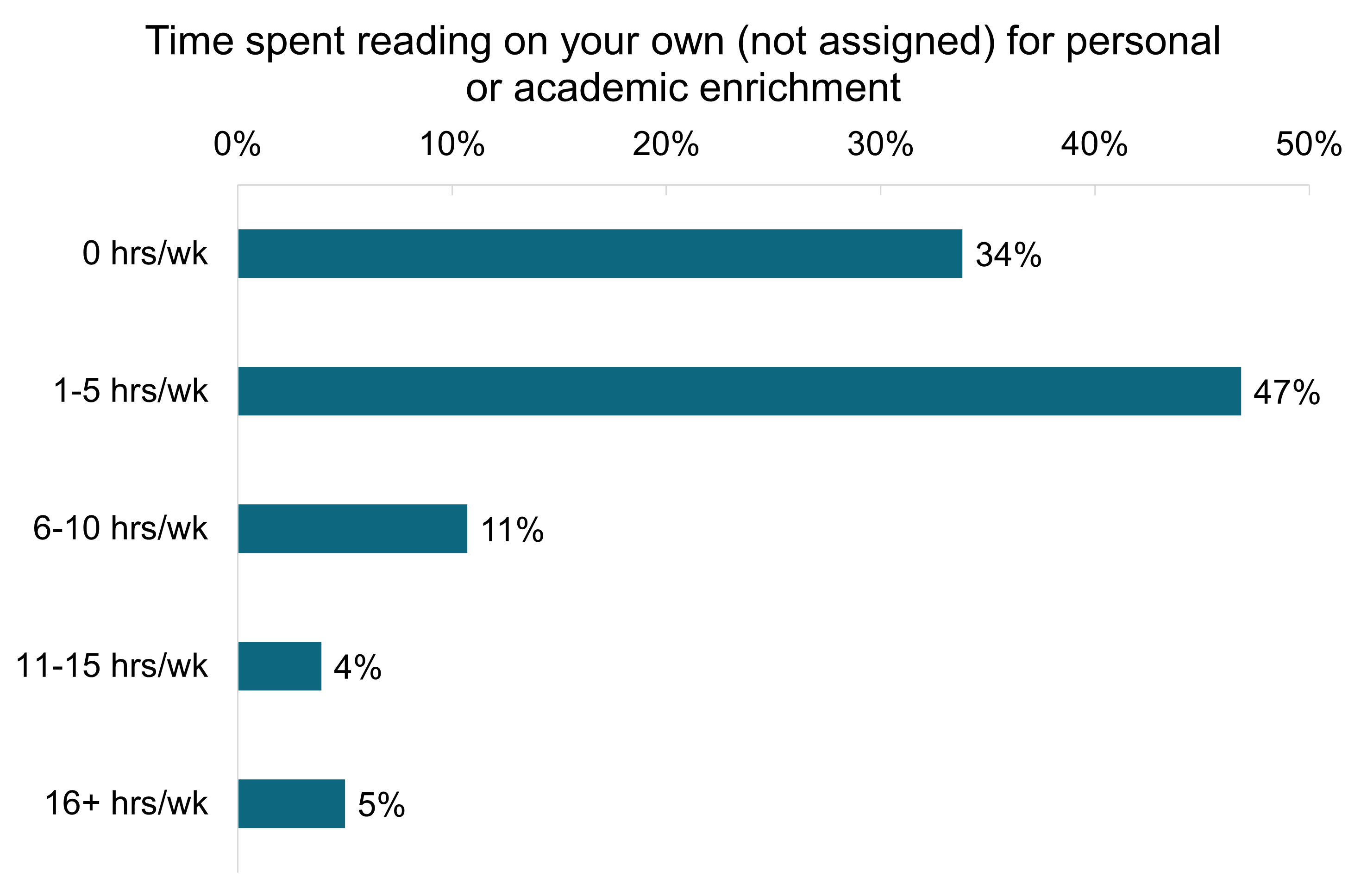
Among the activities faculty tend to value the most are intellectually enriching, self-directed work like reading beyond assigned materials. The average for all students is 3.9 hours of non-assigned reading per week. About a third (34%) of students report zero hours per week spent on this kind of reading, and another 47% report just 1–5 hours. In other words, more than 80% of law students are spending at most five hours weekly on any reading that isn’t required. Students do regain a bit of this time as they progress (from 3.5 hours for 1Ls to 4.4 hours for 3Ls), but even by the third year, the increase is modest. Whatever aspirations we may have about cultivating broad, reflective readers, the structure of law school leaves limited room for it.
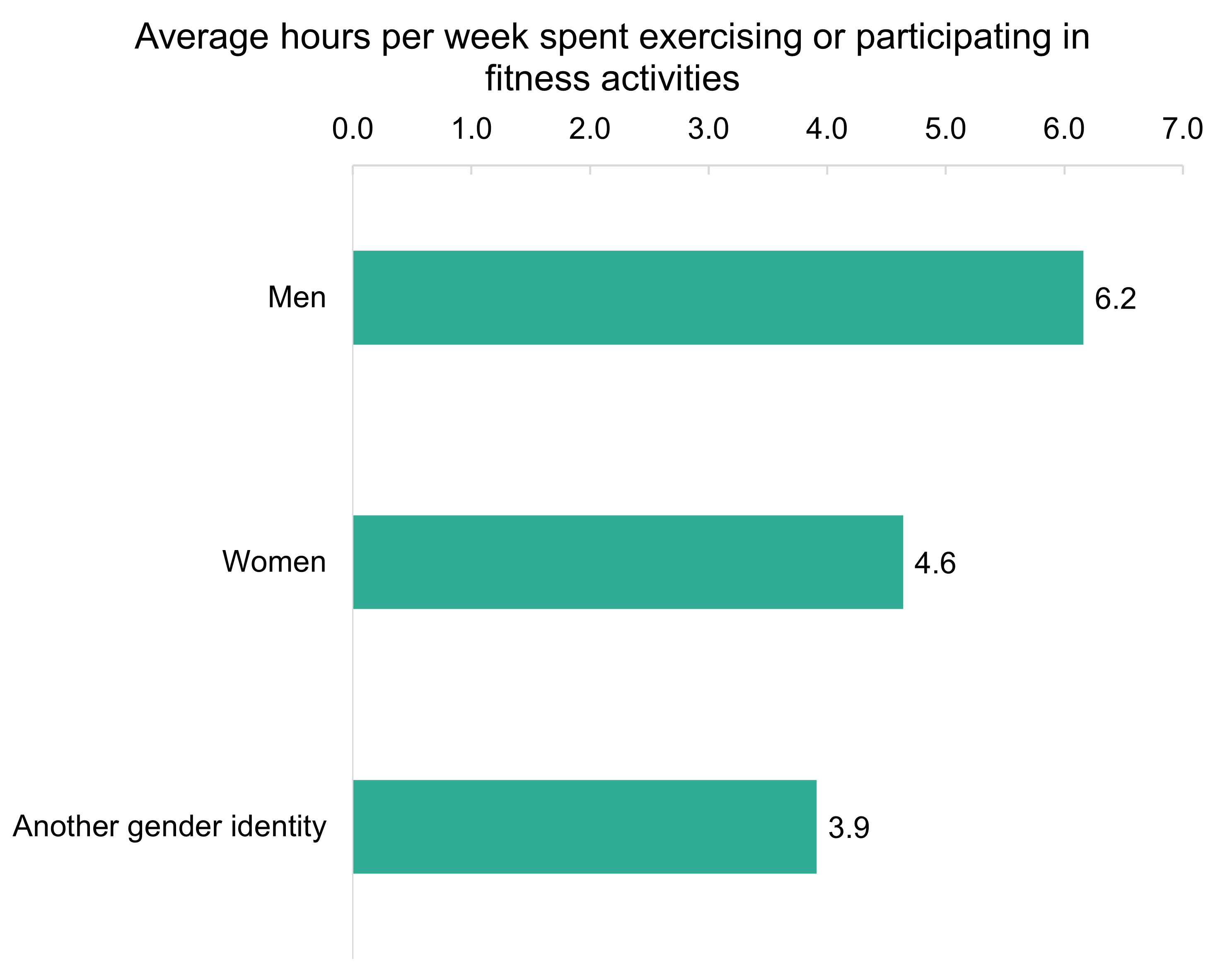
Exercise presents a somewhat more encouraging picture, though still within some constraints. About 16% of students report no exercise at all, while nearly half (48%) report 1–5 hours per week, and another 25% report 6–10 hours. The mean is 5.3 hours per week, suggesting that the average student is likely meeting CDC guidelines for at least 150 minutes of moderate-intensity physical activity per week. However, there are meaningful differences across groups: men report 6.2 hours per week on average, compared to 4.6 hours for women and 3.9 hours for students identifying with another gender identity. These gaps matter, especially given the well-established links between exercise, stress management, and cognitive performance.
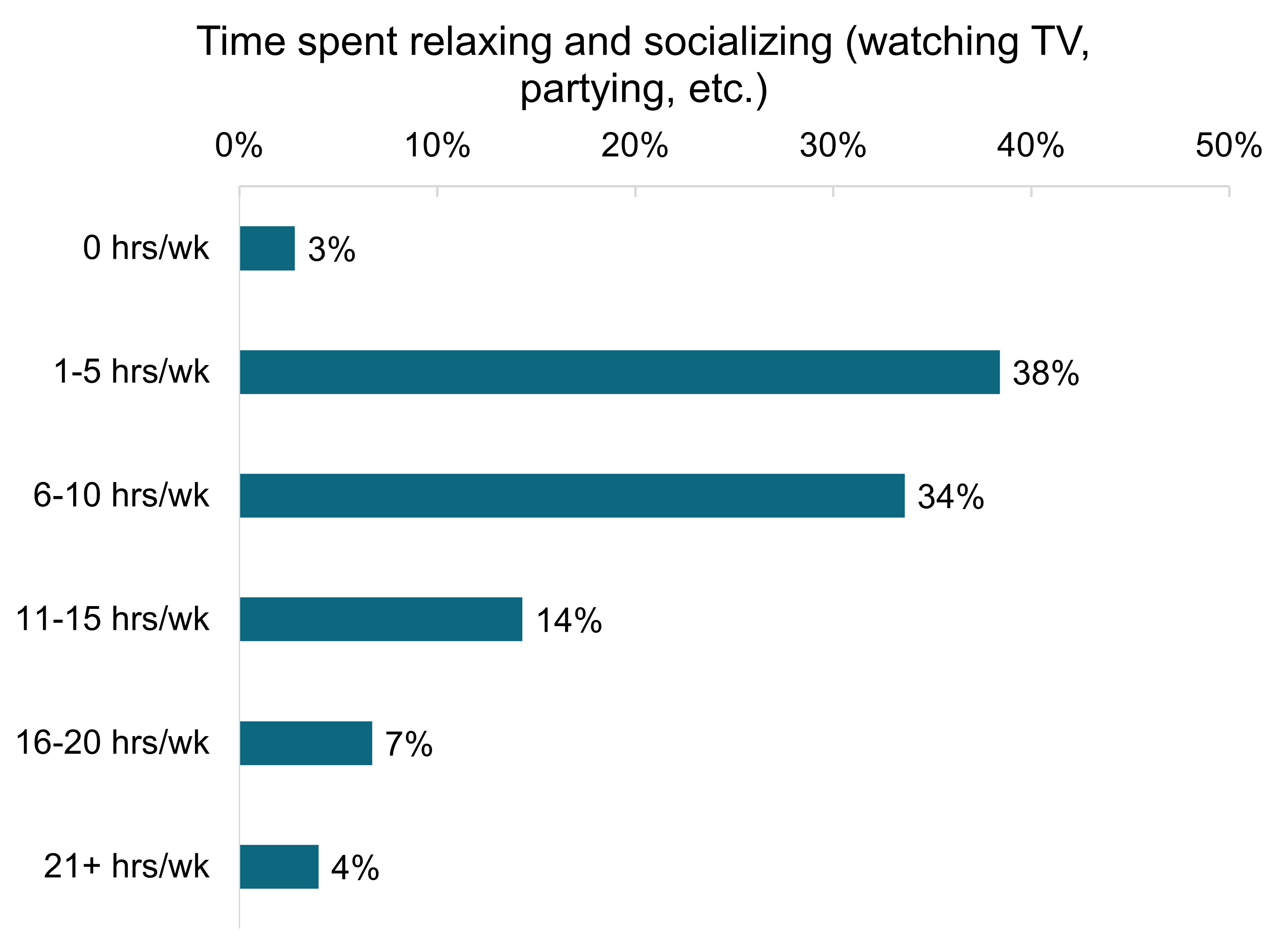
 Students appear to invest somewhat more heavily in social and leisure time. Only 3% report zero hours spent relaxing or socializing, while a combined 72% spend between 1 and 10 hours per week (38% at 1–5 hours and 34% at 6–10). The average—8.1 hours per week, rising to 9.0 hours for 3Ls—makes this the most time-intensive activity captured here. It would be easy to read this as distraction, but this time may be helping students manage stress, maintain relationships, and preserve some sense of balance.
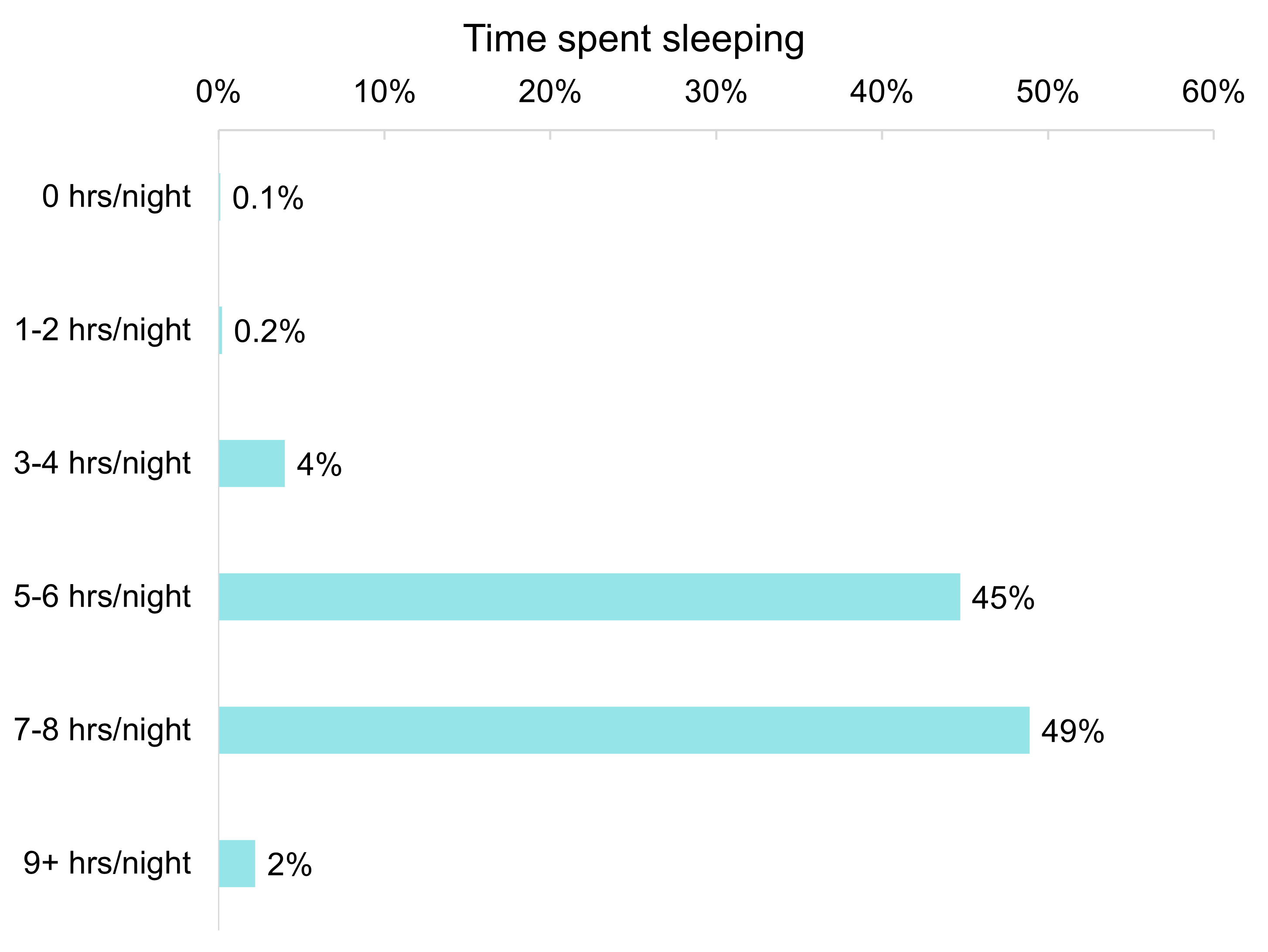
The most concerning pattern is sleep. While 49% of students report getting 7–8 hours per night, nearly as many (45%) report only 5–6 hours, and another 4% report just 3–4 hours. The overall mean is 6.5 hours per night, and it does not meaningfully improve across class years or differ across gender groups. This is problematic because sleep is central to memory consolidation, attention, analytical reasoning, and emotional regulation. A student consistently getting 5–6 hours of sleep is operating at a cognitive disadvantage, regardless of how many hours they spend studying.
For law schools, the implications are structural. Are workloads calibrated in ways that implicitly crowd out sleep and self-care? Do students receive clear signals that rest and balance are compatible with success? Are there meaningful opportunities for reflection, physical activity, and community engagement built into the educational experience? And how should we understand persistent differences across groups in how students are able to use their limited discretionary time?
Leisure activities, self-care, and sleep are closely tied to how effectively students are able to learn and perform in law school. LSSSE data suggest that many students are making room for these activities where they can, but often in limited ways and frequently at the expense of adequate rest. For institutions focused on both academic performance and long-term professional development, these patterns raise important questions about how students’ time is structured and supported.