


A Dress Code and a Worldview
For several years, the Virginia Board of Bar Examiners’ infamously formal “court-appropriate” dress code for bar-exam takers ended with a telling line: “Recognizing the high caliber of professionalism that has traditionally characterized the bar, the Board is confident that no further discussion of this topic will be necessary.” The sentence was eventually removed, but its message reveals a lot about what the legal field means by “professionalism.” Too often, the concept is equated not with ethical judgment but with unquestioned compliance.
A seemingly trivial example about dress code says something central about how lawyers are made. Legal education does more than teach doctrine; it too often socializes students into a professional identity built on hierarchy, restraint, and deference. From law school orientation to the bar exam, students learn that composure signals competence, that neutrality means fairness, and that disagreement threatens professionalism. In a recent essay in the Fordham Law Review, I argue that what law schools call professionalism is too often, in practice, the socialization of compliance.
Obedience Is Not Compliance
The argument rests on a distinction that legal education tends to collapse. Obedience is a deliberate choice to follow authority one has judged legitimate; it engages conscience. Compliance is reflexive adherence to institutional norms, aligning with expectations out of fear, habit, or the desire to belong; it bypasses conscience.
Law students are rarely ordered to comply. Instead, they learn it is expected: to read cues, anticipate reactions, and meet expectations before anyone voices them. Participation norms, rigid deadlines, and the Socratic method used as one-way interrogation all reward students who intuit, obey?, and reproduce authority.
The potential costs are threefold. Students may become estranged from their own moral instincts, and that estrangement falls heaviest on those already marginalized in the profession, whose belonging depends on conforming to dominant norms. The profession suffers, because lawyers trained to equate ethics with rule-following are less able to exercise the discretion justice demands. And, ultimately, democracy may pay the price: authoritarian regimes rely not on lawlessness but on lawful compliance.
What Students Tell Us
This question has new urgency, politically and educationally. Under ABA Standard 303(b)(3), law schools must provide substantial opportunities for students to develop a professional identity, and many will turn to survey data as evidence. But a number alone can’t tell us what kind of identity students are forming: one grounded in discernment, or in decorum.
LSSSE has asked a version of this question before. In 2008 and 2009, it piloted professional-identity questions with more than 9,000 students, and Silver, Garver & Watkins reported a finding that speaks directly to the compliance problem: students primarily located ethics in the Rules. They rated the Professional Responsibility course the most effective setting for learning legal ethics (which makes sense), and only 43% said they frequently discussed the ethical issues embedded in cases in their doctrinal classes. This reflects an all-too-common view of ethics as a siloed endeavor, rather than a value woven throughout the curriculum. The Carnegie Report, which the study quotes, put it more bluntly: students “are warned not to let their moral concerns or compassion for the people in the cases they discuss cloud their legal analysis.”
In a forthcoming article, “The Rules We Test and the Judgment We Don't: Teaching Professional Responsibility in the NextGen Era” (Journal of the Legal Profession), I argue this is partly an assessment problem. Because Professional Responsibility courses are often tested the way the MPRE is, through multiple-choice questions, students practice recognizing violations after the fact rather than deciding what to do as a situation unfolds. They learn the rules as instruments of evaluation rather than of conduct.
The core LSSSE survey asks how much coursework emphasizes memorizing material “so you can repeat [it] pretty much in the same form,” compared with making judgments about arguments and their soundness. Both matter; a lawyer can't exercise judgment about rules she doesn't know. But the balance between them tells us what law schools reward. The 2011 study[1] also found that students with clinical experience reported greater gains in every area of professional development, and the authors wondered whether close faculty-student relationships explained it. Current data could test that: do students who agree, “My instructors care about my learning and success,” or who have a faculty mentor, report more growth in “Developing a personal code of values and ethics” and “Developing a professional identity”? If care tracks with values, professionalism grows from relationships, not rules.
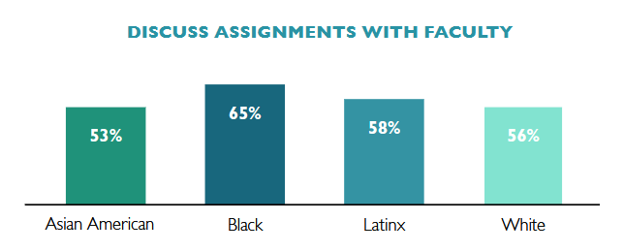
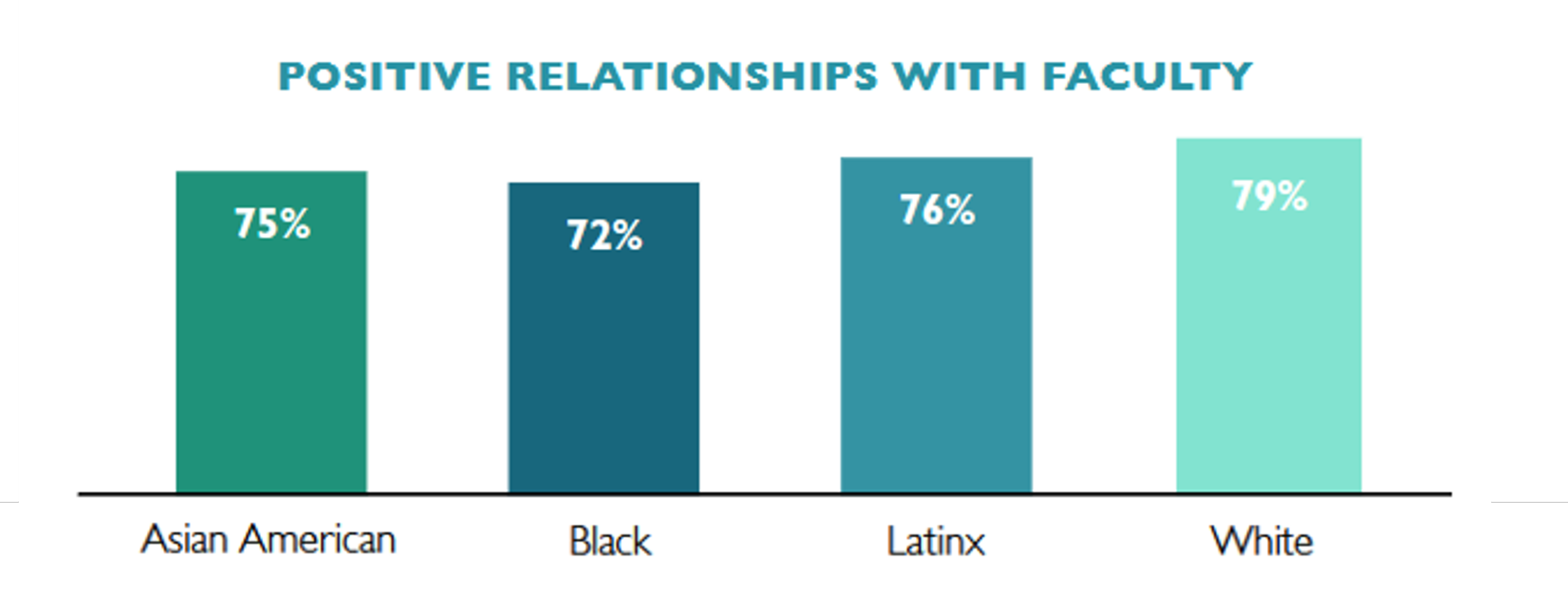
If so, it matters who receives that care. In LSSSE’s 2018 Annual Report, Relationships Matter, Black and Latinx students interacted with faculty more often than white and Asian American students did, yet white students were more likely to describe those relationships favorably. Engagement is not the same as belonging, and students can do everything asked of them and still be performing.
One thing the survey can't yet see is voice. No item asks whether students feel free to disagree with a professor or raise a concern about a policy. We measure whether students belong, but not whether they can dissent and still belong. That would be a question worth adding.
Professionalism Beyond Compliance
The goal is not to produce perfectly compliant lawyers but discerning ones, capable of obedience when warranted and resistance when necessary. Three shifts can help.
Engagement over obedience. Teach students not only to interpret law but to interrogate it: whom it serves, whom it harms, and how it might change. Integrate reflection into doctrinal courses, design simulations with real ethical conflict, and take professional responsibility beyond MPRE preparation.
Care, not compliance. As Kendra Albert puts it, professionalism at its best is “an act of love and belief toward those we work with, rather than a set of behavioral standards that we have to live up to.” When faculty model openness to feedback and repair after mistakes, students learn that authority is earned, not assumed.
Rigor as trust, not punishment. Rigor should challenge without humiliating and demand reflection without exhaustion. Self-assessment, portfolios, and narrative feedback can hold high standards while asking students to take responsibility for their own learning.
Discussion Is Necessary
The rule of law is not self-sustaining. It depends on practitioners who can distinguish lawful authority from legitimate authority and who will speak up when the two diverge. Law schools now have both a mandate to form professional identity and the data to see how students experience it. The question is whether we'll use them to measure decorum or to cultivate discernment. There is no justice without discomfort, no professionalism without reflection, and no democracy without dissent. Discussion is, and must remain, necessary.
[1] Carole Silver, Amy Garver & Lindsay Watkins, Unpacking the Apprenticeship of Professional Identity and Purpose: Insights from the Law School Survey of Student Engagement, 17 Legal Writing: J. Legal Writing Inst. 373 (2011).